To Rotavate or Not, (organic or not)

A place to chat about anything you like, including non-gardening related subjects. Just keep it clean, please!

Moderators: KG Steve, Chantal, Tigger, peter, Chief Spud

User avatar
Cider Boys
KG Regular
Posts: 968
Joined: Sun Mar 05, 2006 6:03 pm
Location: Somerset
Has thanked: 24 times
Been thanked: 111 times

I was very interested in an article from Tom Petherick’s series in the Saturday Daily Telegraph about 10 ways to go Organic. Tom has gardened organically since childhood and in the 1990s ran the productive gardens at Helegan almost entirely organically. His series is both informative and interesting.
Number 5 was:
5 Try to avoid the use of machinery wherever possible. Rotavator are the worst offender: a greater curse was never laid upon the land than the rotavator. The churning blades cause more damage to soil life than is possible to believe. And using a mechanical digger risks spreading perennial weeds.

I happen to share many of his thoughts and aspirations but would like some clarification about organic machinery use.
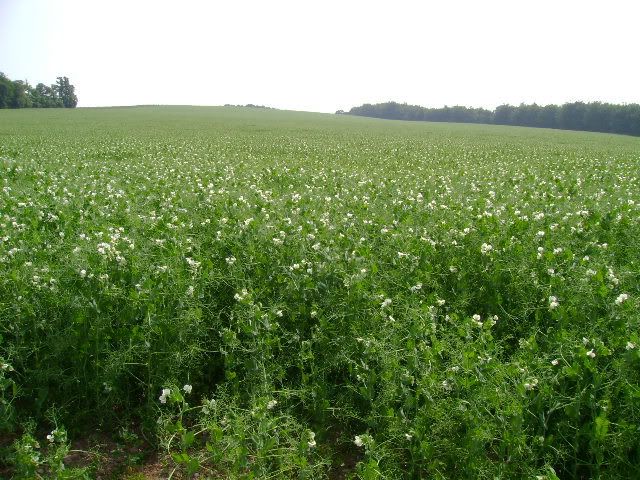
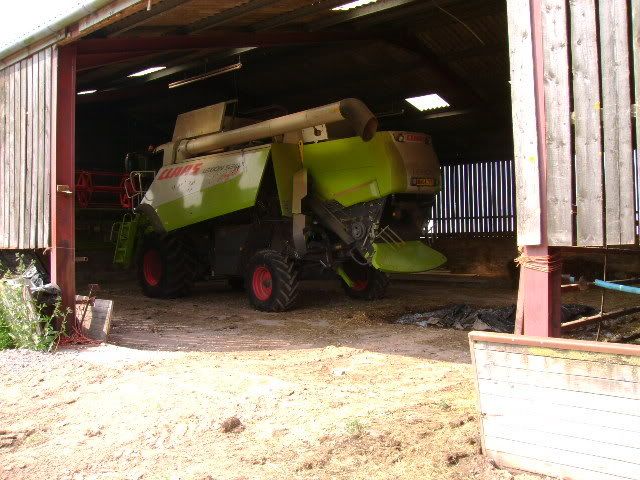
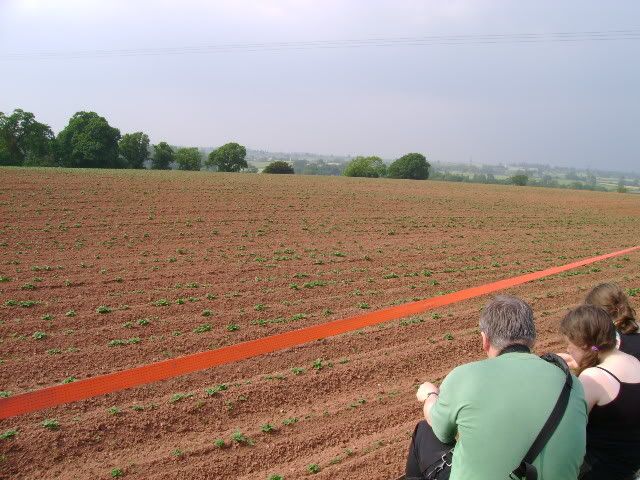
Whilst I accept that in a garden situation there can be methods used to reduce and even eliminate machinery use I find their use to be imperative in any commercial organic venture in this country. I had the opportunity to visit a large commercial organic farm 5 miles from where I live and found the visit very enjoyable. The farm grows organic potato seed and peas for organic livestock feed.
The seed potatoes are spaced closer together than normal and the tops are destroyed when the tubers are of the correct ’hens egg type’ type size.
The potatoes are planted and harvested by an outside agency and the farm’s part of the contract is to supply the land and keep the potatoes weed free etc. The amount of mechanical equipment employed in the growing of these organic seed potatoes and peas has to be seen to be believed.
Image
Image
Image

For my part the humble rotavator is a fine piece of equipment and if used with care has many benefits and I can assure you the potato soils above received many passes from a power harrow. Perhaps there is becoming a distinction or some form of demarcation between organic as practiced by a gardener who defines ‘organic’ as – simply a method of working with rather than against nature – and the commercial SA approved organic movement.
Simply an observation

Barney
User avatar
richard p
KG Regular
Posts: 1573
Joined: Mon Nov 21, 2005 1:22 pm
Location: Somerset UK

hi barney.
i dont think anyone can generalise about machinary use, every garden is different, size,soil type, amount of stone, amount of labour available etc.

i use a howard 70 inch rotovator on part of the garden. i accept this produces an excellent crop of weeds, i may hoe them off if i have the time, i have been known to strim between the sprouts with a petol strimmer. as long as they are destroyed before they set seed they can be thought of as a green manure crop, the deep rooted ones will be bringing up nutrients from the depths. some of the weeds themselves are edible, chickweed , nettles, dandelions etc. weed seeds themselves can be incredibly long lived ive seen pasture that hasnt been ploughed in living nemory ploughed up and produce a fantastic crop of weeds from seeds that must have lain dormant for many years.
maybe the weeds themselves keep the slugs and snails of the planted crops by providing another food source?
the varied flora certainly provides a habitat for a wide range of creepy crawlies.
User avatar
Jenny Green
KG Regular
Posts: 1139
Joined: Sat Nov 26, 2005 4:47 pm
Location: East Midlands

I think the difficulty comes with the necessary commercialisation of food production. Certified Organic is obviously rethinking what it is in essence regarding use of fossil fuels as this has recently become an issue.
I don't think churning up the soil with a rotovator does the environment much good. As well as killing macro organisms and mixing up structural layers, it releases CO2 into the atmosphere. It's my belief that we know so little about the way the soil works we're best off leaving it alone to do it's thing as much as possible until such a time as we really know what we're doing.
This isn't to say that you can't grow perfectly good vegetables on rotovated soil. Obviously you can. But consider the amount of pest and disease that you get on regularly rotovated areas, such as allotments. We don't know if the two are connected.
I've never felt the need to rotovate but then I grow on a small scale for personal needs. I couldn't feed the village the way I grow. I do have a petrol strimmer though.
Certified Organic needs to find a middle way.
(Formerly known as 'Organic Freak')
Earth provides enough to satisfy every man's need, but not every man's greed.
fen not fen
KG Regular
Posts: 126
Joined: Tue Dec 13, 2005 7:54 am
Location: north lincolnshire

Iain Tolhurst and his Stock Free Organic system also advocates not using mechanical cultivation. He has quite a large market garden and as a fellow organic market gardener I don't know how he does it. I cultivate 2 acres and originally tried to do it all by hand but quickly realised there simply aren't enough hours in the day! I do avoid repeated cultivation, for instance I'll rotavate a whole bed in the spring, then cover any bit I'm not using immediately with landscape fabric. That way the soil is still ready to use (weed free and moist) when I do need it later.
Post Reply Previous topicNext topic