Our local history group had an event today "Please bring along any old farming implements, tools or domestic utensils which are no longer used today and which you think may be of interest".
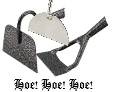
Here is a mystery device which once had a handle (length not known) that nobody knows a specific use for - favourite was a stirrer but of what?
And here is a kitchen utensil, it is a roller but it is barrelled, again function unknown.
And here is a device I liked that they knew the function of but I'll leave you guessing. It's on legs but my photo showing the legs doesn't show the mechanism very well.
What was that for?
Moderators: KG Steve, Chantal, Tigger, peter, Chief Spud
- peter
- KG Regular
- Posts: 5879
- Joined: Fri Nov 25, 2005 1:54 pm
- Location: Near Stansted airport
- Has thanked: 23 times
- Been thanked: 81 times
- Contact:
Could the handle less item be for turning things on or off?
Do not put off thanking people when they have helped you, as they may not be there to thank later.
I support http://www.hearingdogs.org.uk/
- FredFromOssett
- KG Regular
- Posts: 160
- Joined: Tue Oct 23, 2007 5:30 pm
- Location: West Yorkshire
First item could be a thigummywhatsit, and the second a dooferydoo.
- alan refail
- KG Regular
- Posts: 7254
- Joined: Sun Nov 27, 2005 7:00 am
- Location: Chwilog Gogledd Orllewin Cymru Northwest Wales
- Been thanked: 7 times
The middle one's a pastry roller.
Cred air o bob deg a glywi, a thi a gei rywfaint bach o wir (hen ddihareb Gymraeg)
Believe one tenth of what you hear, and you will get some little truth (old Welsh proverb)
- alan refail
- KG Regular
- Posts: 7254
- Joined: Sun Nov 27, 2005 7:00 am
- Location: Chwilog Gogledd Orllewin Cymru Northwest Wales
- Been thanked: 7 times
The first one is a chopper. Fairly similar to an American pumpkin chopper when pumpkins were fed to animals.
Here's a modern version.
http://www.fast-webstore.com/kovovyroba ... escription
Here's a modern version.
http://www.fast-webstore.com/kovovyroba ... escription
Cred air o bob deg a glywi, a thi a gei rywfaint bach o wir (hen ddihareb Gymraeg)
Believe one tenth of what you hear, and you will get some little truth (old Welsh proverb)
- Clive.
- KG Regular
- Posts: 2265
- Joined: Thu Nov 24, 2005 5:01 pm
- Location: East Lincolnshire.
- Has thanked: 72 times
- Been thanked: 442 times
Interesting thread.
...and reminded me that I found an object in the old stables, no connection maybe with stables, just lots of metal "things" largely architectural ironmongery stored there. I posted it up on the Vintage Horticultural & Garden Machinery forum a while ago without any luck at an ident.
Can I add this item to the ponderings here .? It is cast and has a thread in the narrow end. 50p for size ref.
Thank you,
Clive.
Can I add this item to the ponderings here .? It is cast and has a thread in the narrow end. 50p for size ref.
Thank you,
Clive.
- Attachments
-
- cast3.jpg (45.62 KiB) Viewed 3980 times
-
- cast1.jpg (40.21 KiB) Viewed 3980 times
Last edited by Clive. on Sun May 08, 2016 8:06 am, edited 1 time in total.
- Geoff
- KG Regular
- Posts: 5784
- Joined: Thu Nov 24, 2005 5:33 pm
- Location: Forest of Bowland
- Been thanked: 319 times
The device is used for compressing the bundle before tying up. Web searching shows a very different bench like contraption with a seat. Round here apparently the clog makers made brooms as a sideline. There was clog making equipment there as well but as one of the participants is the son of the last local clog maker that was not surprising.
I didn't take a picture of the haystack needle, a device that screwed together like a set of drain rods, and gives rise to the well known saying:
When hay was stored in stacks by the farmers many years ago it was easy for the hay to over heat and spoil, if not dried properly before being stacked. The farmer would use long steel bars, which were called needles, at spaced out intervals along the stack and left there, the farmer could then check, at regular times by pulling the needles out, if the hay was over heating. The problem was that if the needle's positions were not marked, then it was very difficult to find the needles. I believe that is where the saying originates
The sweeper-up thingymajig reminds me of one of the classic Test Match Special moments. A chap came out to sweep the wicket while Brian Johnston and his pal were commentating and there was much discussion about its proper name, finally settling on besum. At that point Fred Truman came into the studio so they asked him. 'A brush' he said dismissively. End of discussion.
See my efforts at:
https://www.flickr.com/photos/norwichho ... 5792756058
and other gardens:
https://www.flickr.com/photos/norwichho ... 1967272989
https://www.flickr.com/photos/norwichho ... 5792756058
and other gardens:
https://www.flickr.com/photos/norwichho ... 1967272989
Could not help with the first two implements, Geoff, but we have a besommaker's tool (the third one) in our garden, much loved as a vantage point by robins and blackbirds. In fact, we have a lot of such oddities in our garden (plough shears, sheep shears, china telephone insulators, bits of railway line, lots of fossils large and small, etc etc), all found by my OH in his dry stone walling days. He once found a beautifully fashioned stone quern in an ancient wall (used as a walling stone) and gave it to the local museum for display.