Page 1 of 3
Serious question re raised beds.
Posted: Mon Jan 08, 2007 9:30 pm
by peter
Could someone please explain something to me.
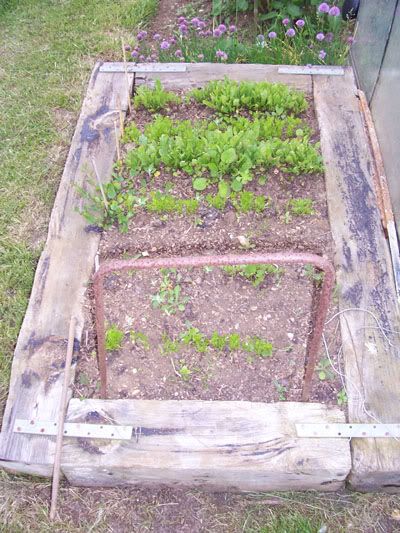
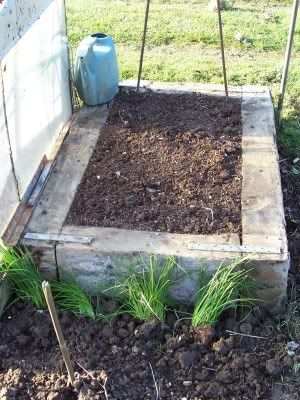
I have a raised bed, it is made of sleepers, ten inches out of the ground and filled to the brim with homemade compost, soil and horse manure.

The majority of those I see, including photos in KG, are not raised beds, they are low fences. Some even have a nice gap round the base to ensure any raised soil spills out.

A one plank fence around a flat ground level bed!
Why do people refer to this as a raised bed?
Posted: Mon Jan 08, 2007 9:52 pm
by Jenny Green
I think if the top of the soil is higher than the surrounding ground then it's raised?
I would personally count anything four inches or more higher than the surrounding ground as 'raised', though not very much so I admit. It would still have the effect of having a greater depth of growing medium than the topsoil, which is the idea of a raised bed.
Maybe because yours are quite high others seem shallow by comparison?
Posted: Mon Jan 08, 2007 10:39 pm
by oldherbaceous
And does the raised bed have to have something to contain the soil, to be classed as a raised bed.

If not my first allotment that i got a lot of years ago is now nearly a foot higher than the surround ground, with the vast amounts of manure that have been incorporated over the years.
Posted: Mon Jan 08, 2007 11:21 pm
by peter
OH, I would say no it does not need a containing edge.
A simple mounded bed is an ecologically friendly alternative, no wood, plastic or preservative, uses a bit more space I suppose.
Posted: Mon Jan 08, 2007 11:29 pm
by Tigger
Guilty as charged Peter - my original raised beds are not raised. They're beds outlined by concrete paths. However, over the last few years we have edged half of these in tannelised timber, so they are raised now and all of my new ones are too.
I always refer to them as raised beds because I use the lightly dig, no tread, compost/manure generously method of managing them.
Posted: Tue Jan 09, 2007 12:06 am
by peter
Jenny, agree with your 4" point.
It was not the height of my sole bed, but the usage of the contained depth by air as opposed to soil that has me perplexed.
Tigger, not seeking to prosecute, just understand. Yours are just beds?
It is all too confusing for a poor simple pedantic lad like me.
Perhaps there are plots, beds, raised beds and high level raised bed, with no-dig as an option on all?
Plot - traditional dig, walk on it gardening, where the paths move around each season.
Beds - feet off work from the side gardening with paths that are permanent.
Raised beds - as above but with the soil level at least 4" above natural ground level.
High level raised beds - suitable for wheelchair or no-bend gardening, at least 3' high.
Does that make sense?
But where does that leave the one plank fence
Posted: Tue Jan 09, 2007 1:27 am
by Johnboy
Hi Peter
The original raised beds were simply a contained bed with the edges made of 4" timber and they were to become raised as you applied more and more composted material over the years. It was the advent of "the clever brigade" when it became fashionable to raise your beds a foot or more. I have a number of contained beds and they are now contained with 8" tanalised timber due to the incorporation of plenty of compost and manure over the years. These are true raised beds and I feel to import soil to make raised beds is just a complete waste of time and money.
The soil in my beds is in wonderful fettle but I have serious reservations as to a load of imported soil which is generally of rather poor quality to make these "super raised efforts". It all takes time and it really is false economy to try and rush it.
The idea is to build up fertility over the years and really any other method may be a raised bed technically but not in the true sense as I know it.
I am therefore unsure how to vote. Please advise.
JB.
raised beds
Posted: Tue Jan 09, 2007 5:34 am
by Allan
If you have the right type of soil, dig it over in the first place and never walk on it, you will have a significant difference in soil level, also the 'path' compacts and drops with the pressure of traffic. It therefore become desirable to put an edging in.
I will shortly be buying sufficient Link-a-bord to create two beds of 2M. x1M. for special purposes and will only use weed-free material for certain crops and thus for example avoid hours of chickweed etc. weeding from cca vegetable strips. I don't believe it is economically sound to go further than that for the majority of crops.
Allan
Posted: Tue Jan 09, 2007 8:17 am
by Weed
I have three 'raised' beds with two more coming under construction within the next few weeks. The beds are surrounded by wood decking material to a depth of 9"
My definition of 'raised' would be higher than the surrounding area. e.g. if I step on a ladder I 'raise' myself above ground level.
For a simple soul like me this will suffice ....As OH has said it can get very technical...a bit like my comment to my Governor and the children a few years ago.. We were loking out of the car window commenting on the different greens in the Countryside....I said flippantly...are we seeing the same green?...Divorce was threatened
Eyesights differ and I raised the question whether we all actually 'see' the same tone of colour...if I was colour blind and I saw red but had been told that it was green would I know any better?
I am getting confused now....I had better go and lie down
Byee
Posted: Tue Jan 09, 2007 10:40 am
by Mole
Hi Peter
Have to agree with Jenny and with your definitions on the last post.
The 'flying plank' thing is quite common and seems to stem from beginners lack of consideration about what they are trying to achieve - they've seen beds edged with timber but not really investigated what a 'raised bed' actually is.
We have sandy soil, and raising the beds purposely is not a good idea as the soil is not as water retentive as others. Great when we were on clay though.
JB - who are "the clever brigade" ? Some folks who think differently from you. Why do you (and the odd other) often have to bring in an element of snideness or divisiveness into a thread. Sorry but that's how it looks to me.
Raised beds as I first came across them were an emulation of chinese methods of intensive production - used for 1000's of years with great sucess.
Cheers
Mole
Posted: Tue Jan 09, 2007 12:29 pm
by Alison
Bob Flowerdew's raised beds are the result of never treading on them and adding stacks of compost etc over the years. In his books the photos show long mounds, quite high. What I find especially fascinating is that he uses the sloping sides differently i.e. a bed running N-S in the recommended way will have the sloping N end pretty well shaded, so he uses it for lettuce, while the sloping S end will be hot and sunny for other veg, and he also takes accounts of the fact that the long sloping sides face east and west.
I already find that rotation is complicated enough: it has to take into account the need to avoid repeats of similar crops on the same soil, as well as remembering that e.g. leeks will still be there in March so you can't use it for potatoes, plus some of our beds can't have winter stuff in anyway as they are waterlogged, plus some crops will shade others e.g. climbing beans.... and now you have to include plans for the really sunny bits and the really shady bits and do they like early morning sun or prefer the softer sunset glow .... strong coffee definitely needed.
Alison.
Posted: Tue Jan 09, 2007 12:53 pm
by Jenny Green
My raised beds are mounds too, but next time I'm going to enclose them. The earth and any compost/manure you add tends to run down the sides and onto my paths.
Posted: Tue Jan 09, 2007 1:45 pm
by Johnboy
Hi Mole,
A definition of the "clever brigade" is those who read the glossy magazines and then come and tell people like me with over 60 years experience how I have been doing it wrong all these years.
I am aware of the history of raised beds and feel that if you had been a member of the HDRA at the outset you probably may have a point of view similar to mine.
The Chinese build up fertility in their soil but the
"clever brigade" do not. So how clever are they? To import soil so that you have a bed that is 12" high of soil of dubious quality and fertility achieves very little.
You seem to be trying to deliberately pick an argument and because I criticise somebody with a different point of view, which is the basis of any discussion, you seem to think you have the right to say so. Feel free Mole. Say what ever you want Mole BUT I do not have to agree with it and if I happen to say so I feel that I also have the right. This is what forums are for!
JB.
Clarity
Posted: Tue Jan 09, 2007 8:42 pm
by peter
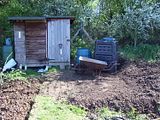
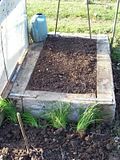
Above is my single massive raised bed, prime use, carrots, reason I'm on clay.
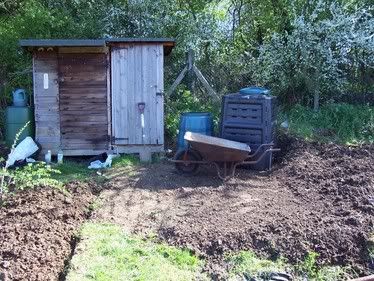
Sandwiched between the two photos is the source of my "imported" soil, to the right of the shed, the previous tenants rubbish heap.
Judge Johnboy
, I wish you to also take into consideration the two full barrowloads of horse shit I added to the sieved soil.
To stretch a point the adjacent 8' X 4' coldframe could be called my second raised bed as it sits on a subframe of treated gravel board and recieved the same fillup treatment of sieved soil and horseshit.
The subframe grew out of two needs. To have a means of anchoring the frame against the allotments wind and to prevent the channels the glass slides in filling up with soil.
Posted: Wed Jan 10, 2007 12:10 am
by Piglet
Alison, Bob Flowerdew also digs out the paths between his raised beds and puts this on top of them and thus raises them further still.